If your garage door refuses to open on a freezing Minnesota morning, you are not alone. You press the opener, hear the motor strain, and nothing moves. For many homeowners, this problem shows up without warning once temperatures drop and winter weather sets in.
Cold weather creates the perfect conditions for garage doors to freeze, stick, or stop working altogether. Ice buildup, moisture, and tightening metal parts can all interfere with smooth operation. Understanding why this happens can help you prevent damage, avoid safety risks, and know when it is time to call a professional.
In this article, we are going to explain why cold weather affects garage doors, what causes them to freeze and stick, and the practical steps you can take to keep your door working reliably all winter long.
How Cold Weather Affects Garage Door Systems
Garage doors are made up of multiple moving parts that rely on smooth operation and proper alignment. Cold weather impacts these components in several ways.
As temperatures drop, materials contract. Metal tracks, springs, and rollers can tighten slightly, increasing friction. At the same time, moisture from snow, ice, and condensation can freeze around seals and hardware.
The result is a door that feels heavier, moves unevenly, or will not open at all.
According to the National Weather Service, repeated freeze and thaw cycles are especially common in the Upper Midwest, increasing the risk of ice buildup around exterior structures like garage doors.
Frozen Weatherstripping and Ice Buildup
One of the most common reasons garage doors stick in winter is frozen weatherstripping.
The rubber seal along the bottom of your garage door is designed to keep out moisture and drafts. When snow melts during the day and refreezes overnight, that seal can freeze directly to the concrete floor.
This can cause:
- The door to feel stuck or glued shut
- The opener to strain or stop mid-cycle
- Damage to the bottom seal or opener motor
Forcing the door open in these conditions can tear the weatherstripping or knock the door out of alignment.
Metal Contraction and Increased Friction
Cold temperatures cause metal components to contract. While the change may be small, it is enough to affect how smoothly your garage door moves.
Key areas impacted include:
- Steel tracks tightening slightly
- Rollers becoming less flexible
- Hinges and brackets losing lubrication
Now that you know this, it becomes easier to understand why a door that worked fine in the fall can struggle in January. Lack of proper lubrication only makes the problem worse.
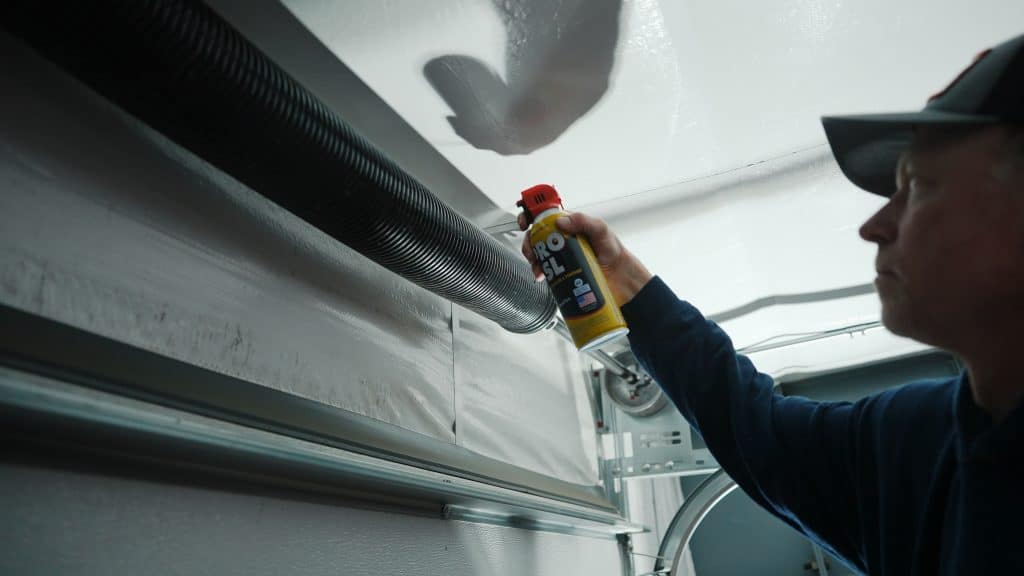
Using a garage-door-specific lubricant before winter arrives can reduce friction and help parts move more freely when temperatures drop.
Moisture in Springs, Cables, and Rollers
Garage door systems are exposed to moisture year-round. In winter, that moisture can freeze inside critical components.
Torsion springs and cables are especially vulnerable. Ice buildup can limit movement or increase tension, making the door feel unusually heavy. In extreme cases, frozen components can contribute to spring failure.
If your garage door suddenly slams shut or struggles to lift evenly, frozen or damaged hardware could be the cause.
Why Garage Door Openers Struggle in Cold Weather
Your garage door opener is also affected by cold temperatures. Lubricants inside the motor can thicken, and sensors may respond more slowly.
Common cold-weather opener issues include:
- Slower opening and closing
- Increased strain on the motor
- Safety sensors affected by frost or ice
When an opener repeatedly strains against a frozen door, it increases the risk of motor failure. This is why it is important not to keep pressing the opener button if the door will not move.
Simple Ways to Prevent a Frozen Garage Door
Now that you understand the causes, here are practical steps homeowners can take to reduce winter garage door problems.
Before and during winter:
- Keep the bottom seal clean and free of ice
- Clear snow away from the base of the door after storms
- Apply silicone-based garage door lubricant to moving parts
- Check weatherstripping for cracks or stiffness
- Avoid using salt directly at the door threshold, which can damage seals
These steps can help, but they are not a replacement for professional maintenance.
When to Call a Garage Door Professional
If your garage door continues to freeze, stick, or move unevenly, it is time to have it inspected. Winter conditions can hide underlying issues such as worn springs, misaligned tracks, or failing openers.
A professional technician can:
- Identify cold-related wear before it leads to failure
- Adjust tension and alignment safely
- Replace damaged seals or hardware
- Ensure your door operates reliably in extreme temperatures
Attempting to fix spring or cable issues yourself can be dangerous, especially in cold weather when components are under extra stress.
Trusted Local Help from St. Croix Garage Doors
St. Croix Garage Doors has been serving the community since the 1980s, helping locals keep their garage doors working safely through Minnesota winters. As a family-owned and operated company, we understand the challenges cold weather brings and prioritize service that is reliable, clear, and fairly priced.
Our experienced technicians know how to spot winter-related issues before they become costly repairs. Whether you are dealing with a frozen door or want to prepare your system before the next cold snap, our team is here to help.
Explore our garage door maintenance resources or contact our team to schedule a professional inspection before winter issues turn into costly repairs.