Garage doors usually don’t fail all at once. Most problems start with a strange noise, slower movement, or a door that suddenly stops closing properly. In Wisconsin and Minnesota, winter weather, temperature swings, and daily use can wear parts faster than many homeowners expect.
Here are the 10 garage door issues we see most, what they usually mean, and when it’s time to call for service.
1. Broken Torsion Springs
This is the most common call St. Croix Garage Doors gets, especially in late winter when metal has been contracting for months. A broken spring sounds like a loud bang, and once it goes, your door usually won’t open at all. Springs have a rated cycle life (typically 10,000 cycles), and most get there faster than people expect. Don’t try to replace them yourself. The tension involved can cause serious injury.
2. Malfunctioning Opener
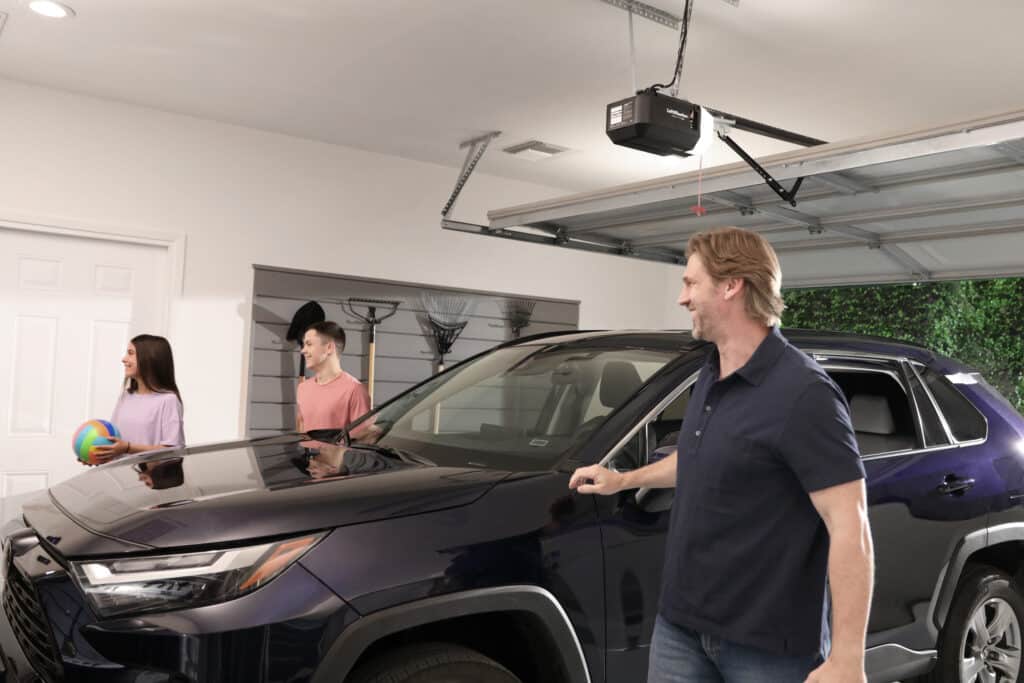
The opener works fine until it doesn’t. Common culprits are a tripped circuit breaker, burned-out motor, or worn gears inside the drive unit. Before calling for service, check whether your wall button works when the remote doesn’t. If the wall button works fine, it’s usually the remote or sensors. If neither works, the motor unit itself may need service.
3. Misaligned or Blocked Safety Sensors
The two sensors near the bottom of your door frame have to face each other directly. Anything in the way, or any slight bump that knocks one out of alignment, stops the door from closing. Look for a blinking light on the opener unit. Realigning the sensors is often a two-minute fix. If they keep drifting, the mounting brackets may need tightening. When in alignment, one light will be yellow, and the other will be green.
4. Worn or Snapped Cables
Cables work alongside your springs to carry the door’s weight. A frayed or snapped cable causes the door to hang crooked or drop suddenly on one side. Like springs, cable repairs involve high-tension components. Leave them to a trained technician.
5. Noisy Operation
Grinding, squeaking, or rattling during operation usually means worn rollers, loose hardware, or a lack of lubrication. A can of garage door lubricant (not WD-40) on the rollers, hinges, and springs every six months makes a real difference in how long those parts last. If the noise is a deep grinding sound, the opener gears may be worn.
6. Door Coming Off the Tracks
When a door jumps its tracks, it’s almost always from physical impact (backing into the door), worn rollers, or a bent track section. Don’t force it back into place on your own. Operating a door off its tracks can damage the cables, opener, and the door panels themselves.
7. Weather Seal Failure
The rubber seal along the bottom of your door takes the worst of what Northwest Wisconsin winters throw at it. When it cracks or pulls away from the door, cold air, water, and rodents find a way in. Replacing the bottom seal is one of the cheaper fixes, and one of the most worthwhile before November hits. There is also a seal around the perimeter of your door that might need replacement.
8. Frozen Door
Ice forming between the bottom seal and the garage floor is a fact of life in Hudson, New Richmond, Menomonie, and Eau Claire. Never force a frozen door with the opener. You’ll stress the motor and risk snapping a spring. Pour warm water along the bottom seal, let it work, then try the door manually first.
9. Dented or Damaged Panels
A backed-in car, a stray basketball, a hailstorm. Panel damage is mostly cosmetic, but gaps in the panels hurt insulation and let in moisture. Individual panel replacement is usually possible without replacing the whole door, depending on the model and how old the door is.
10. Remote or Keypad Not Working
Nine times out of ten, it’s a dead battery. The tenth time, the remote needs to be reprogrammed to the opener. Check your opener’s manual for the programming steps or give your installer a call. If reprogramming doesn’t hold, the receiver board inside the opener unit may need to be replaced.
Need Garage Door Repair Fast?
Brian at St. Croix Garage Doors was on-site fast after a spring failure and got it sorted the same day. “Fantastic to work with,” said Presley F. That kind of quick turnaround matters when your car is stuck inside.
Talk to Your Local Experts at St. Croix Garage Doors
Don’t wait until a small issue turns into a door that won’t open on a winter morning. Whether it’s a broken spring, noisy opener, or frozen door, St. Croix Garage Doors can diagnose the problem and get things moving again.
Call today or book online to schedule service across Northwest Wisconsin.
Garage Door FAQs
How do I know if my garage door spring is broken?
You’ll usually hear a loud bang, and the door will stop lifting. The door may open a few inches and stop, or it won’t move at all. Look for a gap in the torsion spring above the door.
Can I replace a garage door spring myself?
Technically, yes, but it’s not recommended. Torsion springs are under extreme tension and can cause serious injuries if handled incorrectly. A trained technician has the right tools to do it safely.
Why does my garage door reverse before closing all the way?
The safety sensors at the base of the door frame are probably misaligned or obstructed. Check that both sensor lights are steady (not blinking) and that the sensor eyes are pointed directly at each other.
How often should I service my garage door?
Once a year is a good baseline. Lubricate the moving parts every six months, especially heading into winter.
What’s the average lifespan of a garage door opener?
Most openers last 10 to 15 years with regular maintenance. If yours is older and starting to act up frequently, replacement is often more cost-effective than repeated repairs.
Can cold weather damage a garage door?
Yes. Cold weather can put extra stress on several parts of your garage door system, especially during Northwest Wisconsin winters. Metal springs contract in low temperatures, lubrication thickens, weather seals become brittle, and moisture can freeze along the bottom seal or tracks. Over time, these conditions can lead to broken springs, slower operation, noisy movement, or a door that sticks when opening.
Should I repair or replace my garage door?
Repair is usually the better option for isolated issues like broken springs, worn rollers, damaged weather seals, sensor problems, or opener repairs. Replacement often makes more sense if the door is older, has repeated breakdowns, significant panel damage, outdated insulation, or if repair costs are starting to add up.